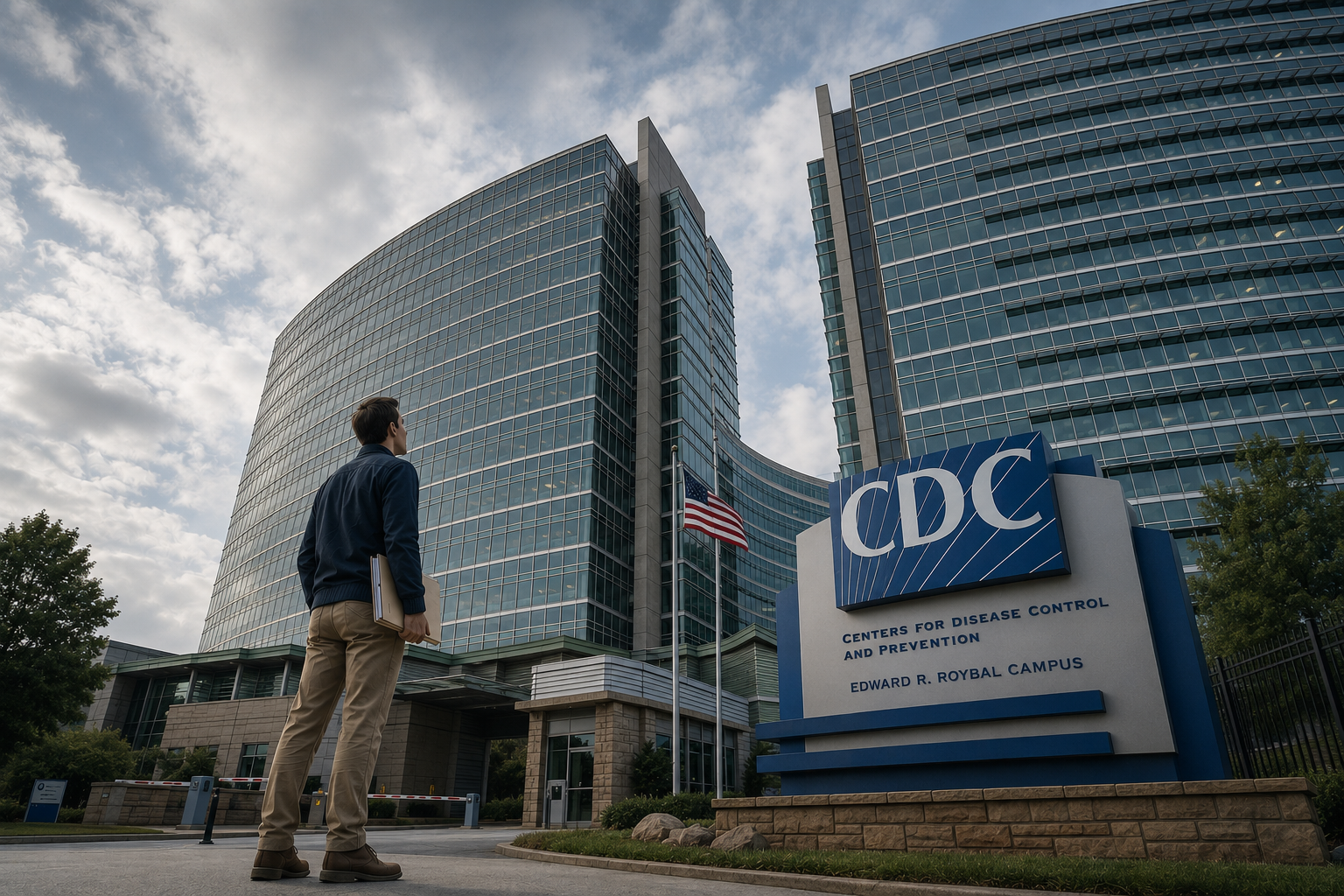
Rabbi Raphael Szendro, a real estate agent by vocation, engaged in a vaccine debate with the CDC from November 2017 to June 2018. Three years earlier, the Jewish schools in Maryland had decided not to accept the religious exemption allowed by their state. While his older children had previously been vaccinated, he and his wife had growing concerns about vaccine safety. Now, the Szendros wanted to enroll their youngest in preschool without having to have him vaccinated. His son’s titers showed immunity for every illness that would otherwise require a vaccine. The Maryland State Health Department accepted titers in lieu of vaccination for every vaccine except DTaP (specifically, acellular pertussis antibodies for the aP part of the vaccine), and he wanted a valid explanation for why.
We were thrilled that we wouldn’t have to complete the series of any of the vaccines. However, at the last minute, the school administration discovered that although Maryland state law allows titers in lieu of vaccination, they do not accept titer levels for DTaP. Of course, the big question was, WHY? I was determined to find the answer. (Introduction, p2)
Rabbi Szendro begins his paper, The Vaccine Debate, by stating that we know G-d through science and nature and that distorting either reduces our ability to understand and perceive His existence in the world. There exist doctors who believe that vaccines are safe and effective and others who believe that they are unsafe and defective. He wanted to understand who’s telling the truth.
There are physicians and scientists on both sides of the debate. Some will say vaccines are safe and effective, while others will say they are toxic and defective. Are they the greatest invention since sliced bread, or are they the biggest mistake in the history of medicine? Do vaccines enhance our immune system, or do they ruin it? The goal of this discussion is to determine which scientists are telling us the truth. (Introduction, p1)
Moreover, he wanted to raise the point that the debate exists. Despite a greater understanding of the immune system now than when vaccines were first developed 200 years ago, vaccine science has remained pretty much the same.
Many people are under the delusion that “the science is settled” and there’s nothing to talk about. As you will soon find out, the science is not settled by any stretch of the imagination. Charles H. Duell, Commissioner of the US Patent Office, made the same mistake in 1899 when he purportedly said: “everything that can be invented has been invented.” We are constantly discovering new aspects of our remarkable immune system. As our understanding of the immune system develops, the way in which we would like to manipulate that system should also develop. Every time a new discovery is made, we should reevaluate every assumption we have made and ask: are vaccines the best way to go, or should we try an entirely different approach? That’s how science usually works. Unfortunately, this question has never been asked in nearly 200 years and counting.
At a minimum, we should always be asking: how can we improve vaccines? But even this basic request is like pulling teeth. (Introduction, p1)
He hoped that his paper would help educate other parents, so that they could make better-informed choices for their children.
Taking the Question to the CDC
When his state health department had no explanation, he turned to the CDC. It was during his communications with the CDC that Rabbi Szendro learned that they cannot rely on titer levels for protection against pertussis. From their response on November 24, 2017:
However, there are no well-defined serologic correlates of protection for pertussis. In other words, titers are not a reliable measurement for protection against pertussis disease. Thus, even if your son has positive pertussis titers, he may not be fully protected against pertussis disease. Therefore, your son would be recommended to receive a dose of DTaP between 4-6 years of age in accordance with the recommended schedule. This dose is to provide protection against pertussis during his early school years. (p6)
He also learned that multiple DTaP boosters are required because the pertussis vaccine wanes over time and that it doesn’t stop vaccinated individuals from transmitting pertussis to others.
He summarized his communications with the CDC in a final letter to them on June 18, 2018, including what he learned about the DTaP and its lack of efficacy.
– We agree that the current pertussis vaccine does not create herd immunity. You stated: “We do need better pertussis vaccines that can interrupt transmission as you point out” [2/22/18]. Meaning, the current pertussis vaccine does not interrupt transmission. When you said: “as you point out”, you were referring to the numerous published articles which I quoted [11/28/17], for example: “current acellular pertussis (aP) vaccines fail to prevent colonization and transmission”, and “Despite high levels of vaccination coverage, pertussis circulation cannot be controlled at all.”
– Not only does DTaP fail to protect the “herd” from colonization and transmission, it puts vulnerable individuals, like infants and immunosuppressed at a higher risk of infection and death [11/28/17 and 1/8/18]. The only thing that we disagreed on was how to deal with the problematic situation. I suggested that we stop using DTaP until a better quality product is produced, while you recommended that we continue using it [1/10/18, 2/22/18 and 3/6/18]. But the fact that the use of DTaP puts certain individuals at a higher risk of death, remains undisputed. In other words, we both agree that if everyone in the country stopped using DTaP, there would likely be fewer infant deaths from pertussis.
– It was unclear to me why titers cannot be used to determine whether someone is protected against pertussis. But as I said [11/28/17], I suspect it has something to do with the fact that the pertussis vaccine is fundamentally flawed and doesn’t work the way it was intended. Cases of pertussis have been increasing over the past several years, despite high levels of vaccination coverage. For some reason, we think that if we give everyone as many doses of the defective vaccine as we possibly can, even if they already show sufficient titer levels, it will somehow correct the problem. Sounds to me like a textbook case of insanity. (p38)
The truth
Rabbi Szendro, who has no medical or scientific background, engaged in a lengthy back-and-forth with the CDC. They admitted in November 2017 (see above) that they don’t have an effective way to measure immunity against pertussis, and further admitted in writing on February 22, 2018, what the vaccination campaigns never mention: that for pertussis, it can be the vaccinated who spread it.
We do need better pertussis vaccines that can interrupt transmission as you point out. (p10)
Read Rabbi Szendro’s The Vaccine Debate here.